 I personally would never call “I Don’t Know (09/12/2001)” the blues. All I’m going to say is that it has a bluesy sound and I had the blues when I wrote and recorded it.
By definition I guess it is then…
“I Don’t Know (09/12/2001)”
[audio:http://www.linearcanvas.com/wp-content/uploads/2010/09/I Don’t Know 20100926_1039m256.mp3]
If The Above Player Does Not Appear Or Does Not Work, Click Here
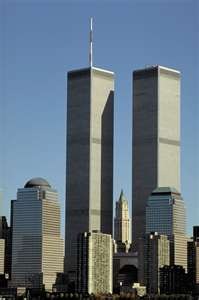
When I wrote this song on September 12th, 2001. I didn’t know as much about the events of the previous day as I do now. I must say that my internal skeptic was in full gear though. I, like every one else that day, was too shocked by the events to do any real critical thinking. Like how did they know so much about the hijackers so quickly when none of their names appeared on any of the flight manifests?
The reports started coming in about the incidents of that day as I was nearing Cincinnati, Ohio on I-75 listening to the radio. I was on my way to the town of Amelia to work on a TV distribution system there. I worked eight straight hours on the distribution network and did a good job fixing the problems. But I had some TV channels off most all day. People were probably trying to watch the events unfold on TV like I was doing, but their favorite channels were probably going on and off. Lucky for me, I knew what channel to watch.
I didn’t think of that until days later. I probably should have come back the next week. But not knowing the scope of the situation, I just kept working.
Not suspecting any conspiracy yet, I knew that whatever the Bush administration did next would be wrong just based on their performance to that date. They certainly didn’t take long to prove me right. The whole war thing has been a bungled disaster that will have cost the suckers, er, I mean the taxpayers two trillion dollars and the lives of countless thousands of poor innocent people.
I don’t know what really happened that day. But volumes of evidence and common sense should tell us that there is more going on here than we’re being told. They want me to believe that nineteen men, mostly Saudi Arabian’s, defeated the trillion dollar defense I and many others have been paying for since World War Two? Then, a) I want my money back and/or b) I want a new investigation into what happened on September 11th, 2001.
Any national defense and airline employee that dropped the ball that day, should be at least fired because they failed their duties to protect America.
If someone were found responsible for the act itself in some way, life in prison or the death penalty. Either will do. I don’t even care if they are an Arab, Israeli, Asian, European, African or American. Osama Bin Laden even. As long as we have the evidence. I think there is most likely plenty of it.
To this date, no one has been fired or criminally charged for the attack.
Will Someone Ever Pay For This Crime?
—
I was in my basement in Swanton, Ohio at the time and sat down at the drums. I started playing this beat. I thought it was cool so I recorded it with one microphone and built the rest of the song around it. It was the first time I had ever done this. Use one microphone that is. I love overkill.
These tracks were originally recorded on a Fostex VF-16 digital multi-track recorder. I played electric guitar on a Fender Stratocaster. The bass was a Rickenbacker 4001. I played drums on my Ludwig’s. I digitally processed the instrument and vocal tracks using Cakewalk Sonar 8.5 Producer DAW and Sony Sound Forge 9 audio editor.

 For the last half century, the national Republican Party has had a track record for not achieving the goals of their conservative electorate. I considered myself a Republican, the Party of Lincoln, when I was young. I thought being conservative meant being responsible with the public’s tax money and keeping government out of one’s personal affairs. A naive boy I was.